Water Heater Maintenance Checklist for Madison, WI
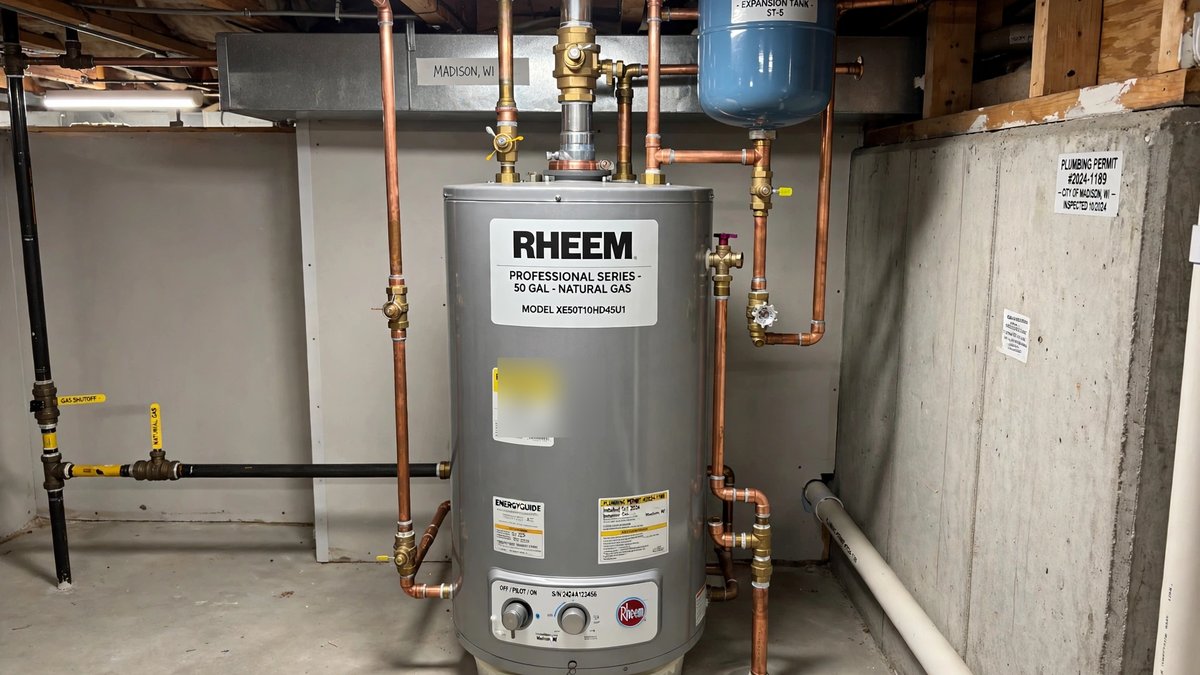
Why Madison heaters need regular care
A water heater that gets a little attention each year is far less likely to quit on a cold Madison morning. Madison-area groundwater is hard, so scale builds up inside tanks and tankless heat exchangers faster than in soft-water towns. Winter brings very cold inlet water, so the heater works harder from December through March. Most Madison heaters also sit in basements, where a slow leak can go unnoticed until it reaches the floor. A short routine catches those problems while they are still small.
The checklist below is split into monthly looks, seasonal tasks, and annual jobs by heater type. None of it needs special tools, and every step tells you when to stop and call a plumber instead.
A quick monthly check
Once a month, spend two minutes at the heater. You are looking for change, not perfection.
- Look at the floor around the base and the drain pan. Any moisture, rust stains, or white mineral crust is a sign to investigate.
- Listen while the heater runs. Popping or rumbling usually means sediment at the bottom of the tank. A new hissing or whistling sound is worth a closer look.
- Check the temperature setting. Near 120 degrees Fahrenheit is the usual setting unless a plumber has advised otherwise.
- Look at the vent pipe on a gas unit and the area around the burner. Soot, scorch marks, or a smell of gas mean you should stop and call a plumber right away.
- Make sure nothing is stored against the heater. Boxes, paint, and cleaning products block airflow and can be a fire risk near a gas burner.
Seasonal checklist
Madison weather gives the heater a different job in each season. Use the table below as a reminder.
| Season | What to check | Why it matters |
|---|---|---|
| Spring | Flush the tank and check the anode rod | Clears winter sediment and checks the part that protects the tank from rust |
| Summer | Test the relief valve and inspect the drain pan | Confirms the safety valve opens and that a leak has somewhere safe to go |
| Fall | Check venting, gas connections, and the area around the heater | Gets the heater ready for the cold months, when it works hardest |
| Winter | Watch for leaks and listen for rumbling | Basement leaks are easy to miss in winter, and scale noise shows up when demand is highest |
Annual tasks by heater type
Gas and electric tank heaters
Flush the tank once a year to remove sediment. Sediment insulates the bottom of the tank, makes the burner or elements work longer, and shortens the life of the heater. Have the anode rod inspected every few years and replaced when it is mostly consumed. The rod corrodes first so the tank does not. Test the relief valve by lifting its lever briefly and letting it snap back, following the label on the valve. If it drips afterward or does not open, have it replaced. For a step-by-step guide to checking a heater that has stopped working, see water heater not working: 7 safe checks.
Tankless heaters
Descale a tankless unit once a year, more often if the water is very hard. Scale narrows the heat exchanger, causes error codes, and can shut the unit down. Clean the inlet filter at the same time, and check that the vent termination outside is clear of leaves and snow. If you are seeing error codes, our page on tankless water heater repair explains what they usually mean.
Heat pump heaters
Keep the air filter clean and the area around the unit clear so air can move freely. A heat pump heater cools the room it sits in, which matters in a Wisconsin basement, so do not box it in. Check the condensate drain for blockages, and listen for a fan that sounds strained. Heat pump models also have an anode rod and a relief valve, so the tank tasks above apply to them as well.
Signs to stop and call a plumber
Maintenance is for prevention. These signs mean the heater needs a professional, not another checklist item.
- Water leaking from the tank body rather than a fitting. See our page on leaking water heater repair for how to tell the difference.
- A gas smell, soot, or scorch marks around a gas unit. Leave the area and call for help.
- Rust-colored hot water that continues after a flush.
- The same fault coming back within weeks, or a heater that trips its safety reset again and again.
- No hot water at all, especially in winter. See our emergency water heater repair page if the situation cannot wait.
What a professional maintenance visit covers
A plumber on a maintenance visit does the jobs that need tools and experience: flushing the tank properly, testing the gas valve and venting, checking elements and thermostats with a meter, descaling a tankless heat exchanger, and inspecting the anode rod. The visit is also the right time to ask about the heater’s age and condition. If the heater is old and showing wear, our repair or replace guide explains how to decide, and our water heater replacement page explains what a new installation includes. Keep the data label photo and any service notes in a safe place, because both are useful if a problem comes back.
Frequently asked questions
How often should I flush my water heater?
Once a year is a good rhythm for most Madison homes, because hard water leaves sediment at the bottom of the tank. If the water runs cloudy or the heater rumbles, ask a plumber to check it sooner.
How do I know if the anode rod needs replacing?
A plumber checks it during a service visit. When the rod is mostly eaten away, it no longer protects the tank, and replacing it can add years to the heater’s life.
Does maintenance help in hard water areas?
Yes. Scale is the main reason Madison heaters wear out early. Flushing, descaling tankless units, and keeping the anode rod in good shape all slow scale damage.
Business: Madison Water Heater Pros
Address: 706 Post Rd, Madison, WI 53713, USA
Hours: Mon, Tue, Wed, Thu, Fri, Sat, Sun: 00:00-23:59
Phone: (608) 817-2841
Water heater problem? Talk to a local plumber now.
Call (608) 817-2841
Dispatch answers 24/7 — you are connected with an available local professional.